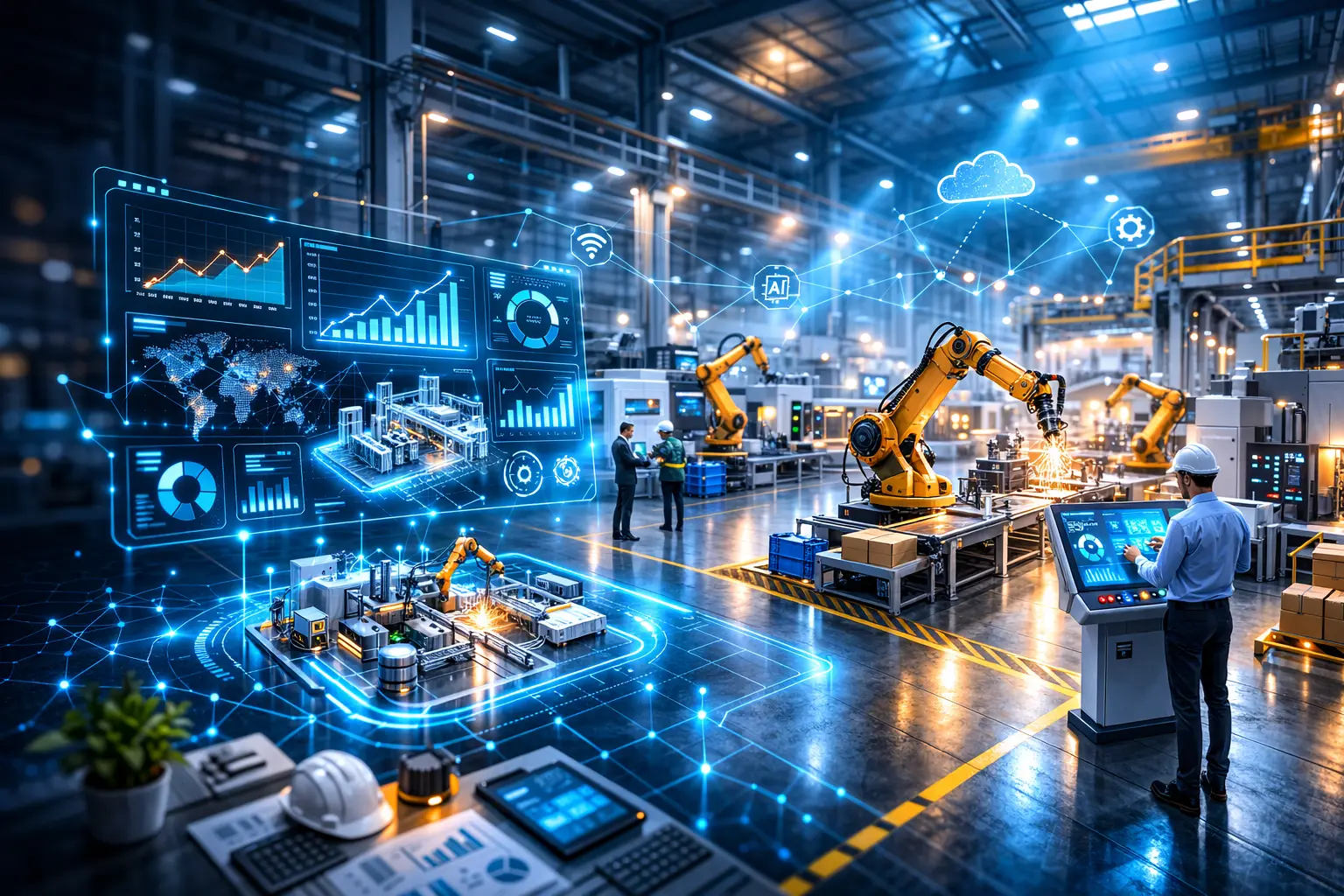
Idle time often hides in the spaces between systems. A production planner sees one view of the operation, the warehouse team sees another, and leadership receives updates only after delays have already affected output. Digital twin technology helps bridge that gap by providing a shared visual model of the factory and its current operating conditions.
Visibility that supports action
When teams can explore production status, material movement, and constraints in a more intuitive way, they can make decisions faster and with greater confidence. Ordering priorities become clearer. Bottlenecks stand out earlier. Cross-functional conversations become shorter because everyone is working from the same operational picture.
That matters especially in environments where even small disruptions can cascade into schedule slips, excess inventory, or idle equipment. A digital twin does more than make the operation look modern; it shortens the distance between what is happening and what teams do next.
Connecting digital twin value to execution
The strongest results come when visualization is linked to execution data, planning assumptions, and plant-specific workflows. That allows manufacturers to use the digital twin not only as a monitoring layer, but as a tool for simulation, coordination, and improvement.
Athena sees this as part of a broader operational maturity journey. By connecting digital twin capabilities with MES, ERP, and planning processes, manufacturers can reduce idle time, improve responsiveness, and create a more connected operating model from order intake to production delivery.
