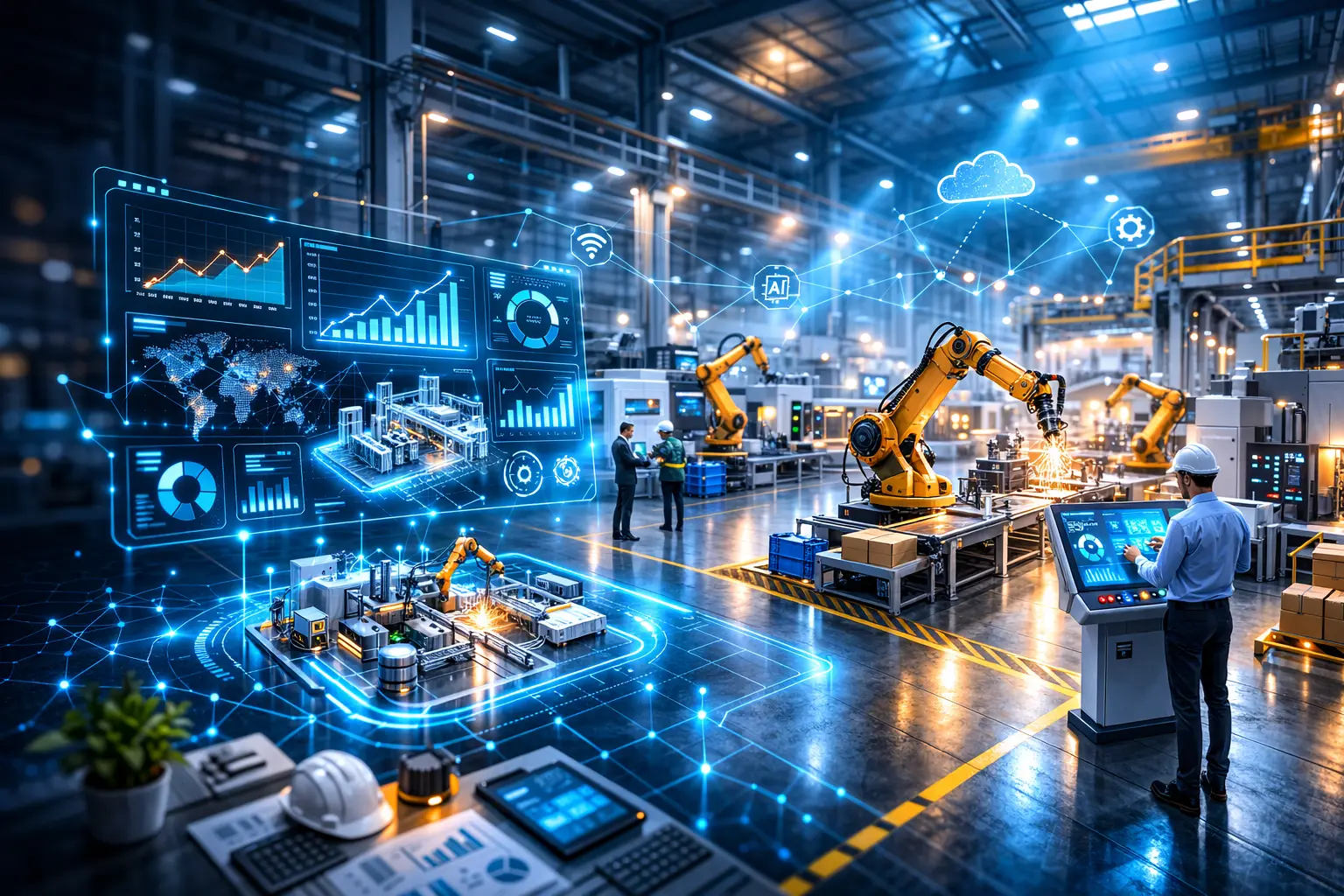
Digital transformation in manufacturing is no longer an optional future-state discussion. It is a present operational priority driven by cost pressure, customer expectations, supply chain volatility, and the need for more resilient execution. The challenge is that transformation is rarely about one system. It is about creating a connected operating model that supports better decisions across the business.
Where manufacturers are focusing first
Many organizations begin with visibility, traceability, and workflow standardization. Those priorities make sense because they create the operational discipline required for stronger planning, better quality control, and more scalable improvement. From there, manufacturers often expand into analytics, intelligent automation, and more adaptive execution processes.
The trends shaping the next phase
Cloud-ready architectures, AI-assisted decision-making, low-code extensibility, and stronger integration between enterprise and plant systems are shaping the direction of modern transformation programs. Companies want platforms that can evolve over time, not isolated solutions that create new silos.
At the same time, the hardest challenges remain familiar: fragmented data, inconsistent processes, unclear ownership, and change fatigue. Technology alone does not solve those issues. Success depends on alignment across operations, IT, engineering, and leadership, supported by a roadmap that turns vision into sequenced execution.
Transformation that sticks
Athena approaches digital transformation as a practical business journey. The goal is to deliver measurable value, establish strong foundations, and create the flexibility needed for future capability expansion. That is how manufacturers move beyond isolated projects and build durable digital momentum.
